
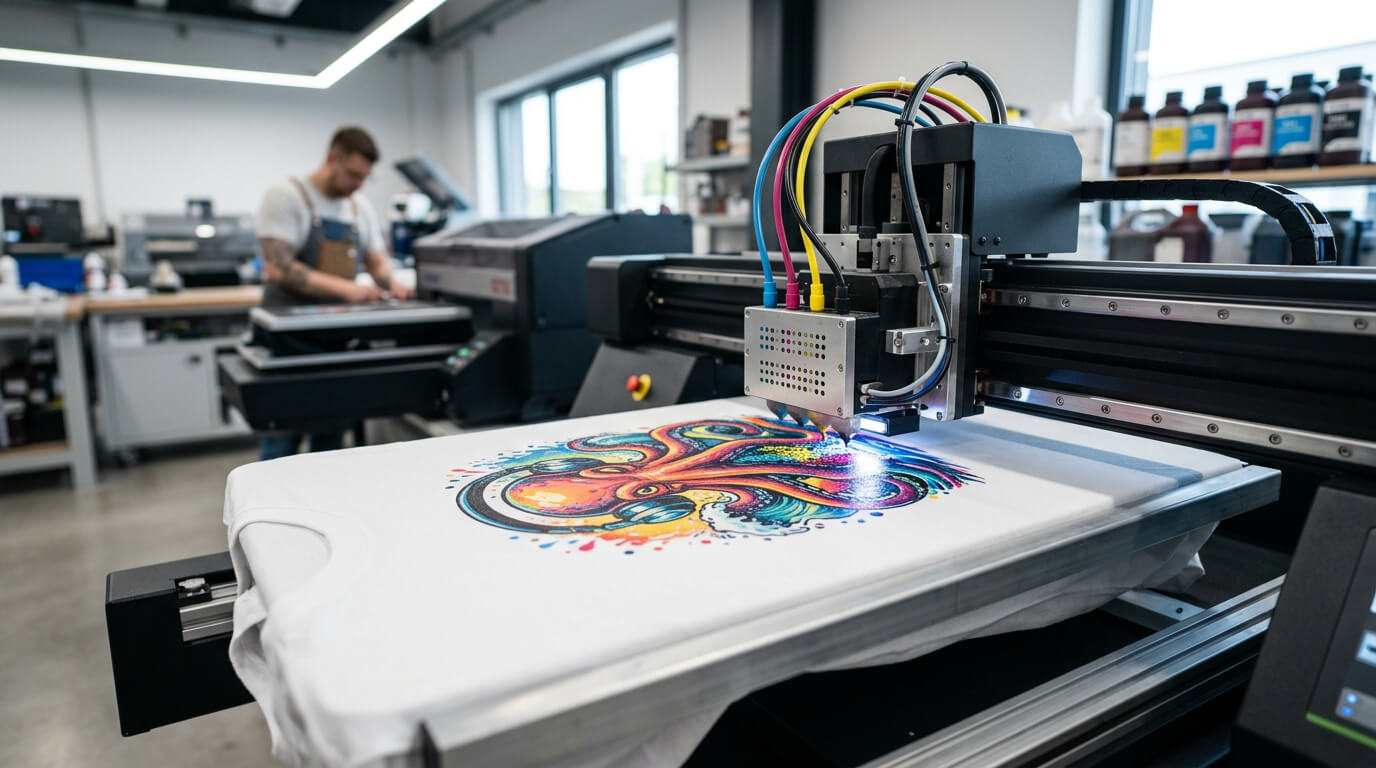
How does Direct to Garment technology work?
The DTG printing process is fundamentally very simple, but it requires top-tier technology. The garment (most commonly a t-shirt or hoodie) is secured onto a special platen, and the print head begins directly applying eco-friendly, water-based inks.
While printing on light-colored textiles happens immediately, printing on dark and black fabrics requires an extra step – called pre-treatment. A special solution is first applied to the fabric, followed by a white base layer. The colored inks are then sprayed onto this white base. After printing, the textile passes through a heat press or tunnel dryer, where the colors are permanently fixed into the fibers.
Main advantages of DTG printing
Why is DTG so popular for creating high-quality corporate merch and custom printed t-shirts? Here are the main reasons:
- Unrivaled soft feel: Because the ink absorbs directly into the fabric's structure (especially on light textiles), there is no "rubbery" layer on the surface. The print is perfectly breathable and comfortable to wear.
- Photorealistic quality: DTG printers can print in full color at high resolution. Complex color gradients, shading, or even classic photographs are handled with absolute ease by this method.
- Flexibility for small orders: The method requires no production of printing screens or templates. This makes it economically viable even for small batches of promotional items or single-piece runs.
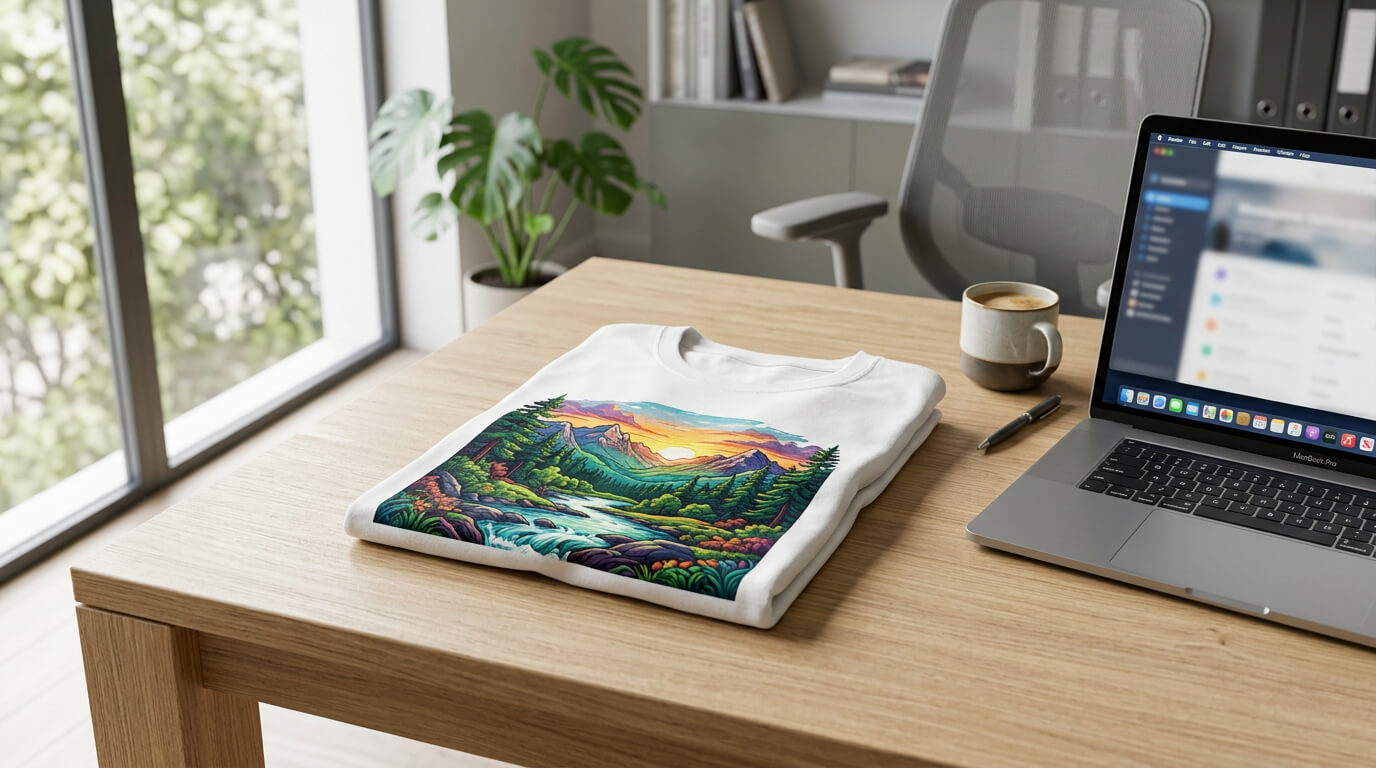
Comparison: When to choose DTG and when DTF printing?
Both digital technologies – DTG (Direct to Garment) and DTF (Direct to Film) – have their irreplaceable role in modern custom printed textiles production.
Choose DTG printing if: you print primarily on 100% cotton (or fabrics with a high cotton content). It's the clear choice if your absolute priorities are the print's breathability, softness to the touch, and a natural look typical of premium fashion brands.
Choose DTF printing if: you need to print on polyester, nylon, or blended materials (typically custom printed backpacks, jackets, or drawstring bags). DTF films adhere better to rougher surfaces and colors tend to be slightly more vibrant, at the expense of a slightly thicker layer to the touch.
Need advice on choosing the right print method?
Not sure whether DTG, DTF, or classic screen printing is better for your order? Leave it to us! At TAEDA, we will not only select the optimal technology for you but also offer you 30 minutes of our graphic designer's work for free to perfectly prepare your data. Fill out our contact form or send us your inquiry directly.
Frequently Asked Questions about DTG (FAQ)
Which materials are best for DTG printing?
DTG technology is primarily designed for natural fibers. It achieves the best, most vibrant, and most durable results on 100% combed cotton, or on blends with at least an 80% cotton content.
How should I wash DTG-printed textiles?
To keep the vibrant colors lasting as long as possible, we recommend always washing clothes with DTG prints inside out, using gentle wash cycles up to 40 °C, avoiding bleach, and not tumble drying.
Is DTG printing eco-friendly?
Yes. DTG printing uses special water-based pigment inks that are environmentally friendly and often meet strict safety certifications (making them suitable even for children's clothing).