
Looking for a print that won't fade even after fifty washes? Need to print hundreds of T-shirts or bags at a great price? Then you are looking for screen printing. It is one of the oldest printing methods in the world, which still has no competition in quality and durability. Let's take a look under the hood of this "messy" but fascinating craft.
What is Screen Printing?
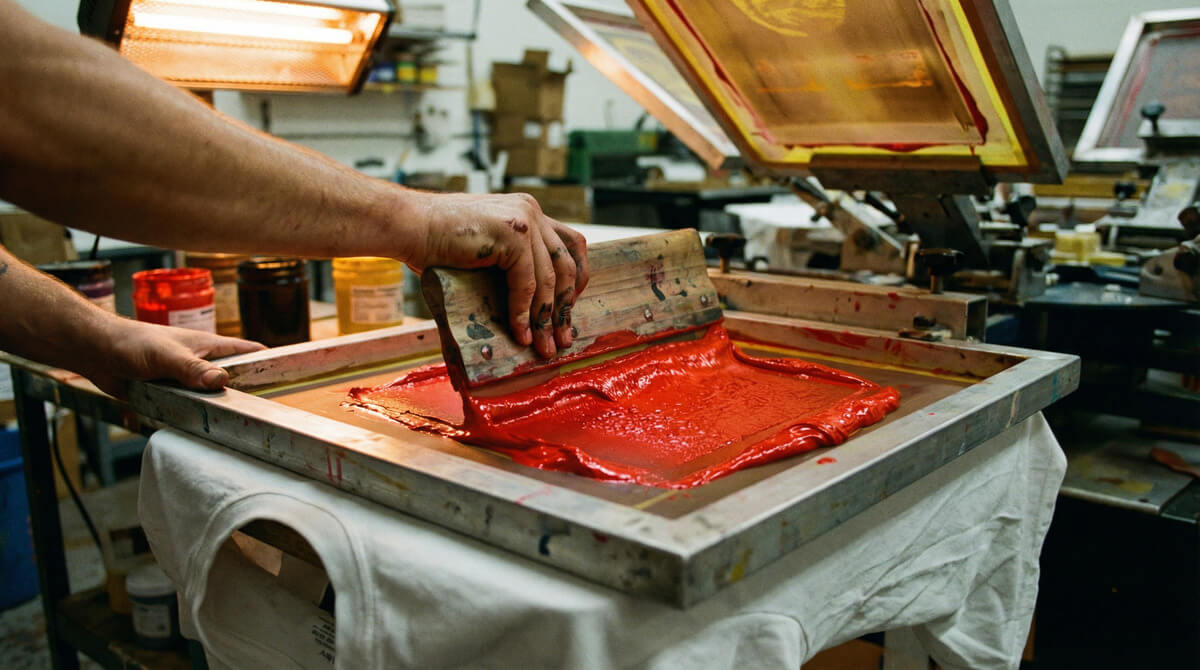
Screen Printing works on the principle of a stencil. Imagine a frame with a fine mesh stretched over it (the screen). Your logo is transferred onto this mesh using a photographic process.
The areas where the logo should be remain permeable. The rest of the screen is blocked with an impermeable emulsion. The printer then takes a squeegee and pushes the ink under pressure through the open areas in the screen directly onto the T-shirt, bag, or other item.
Why do we recommend it at TAEDA?
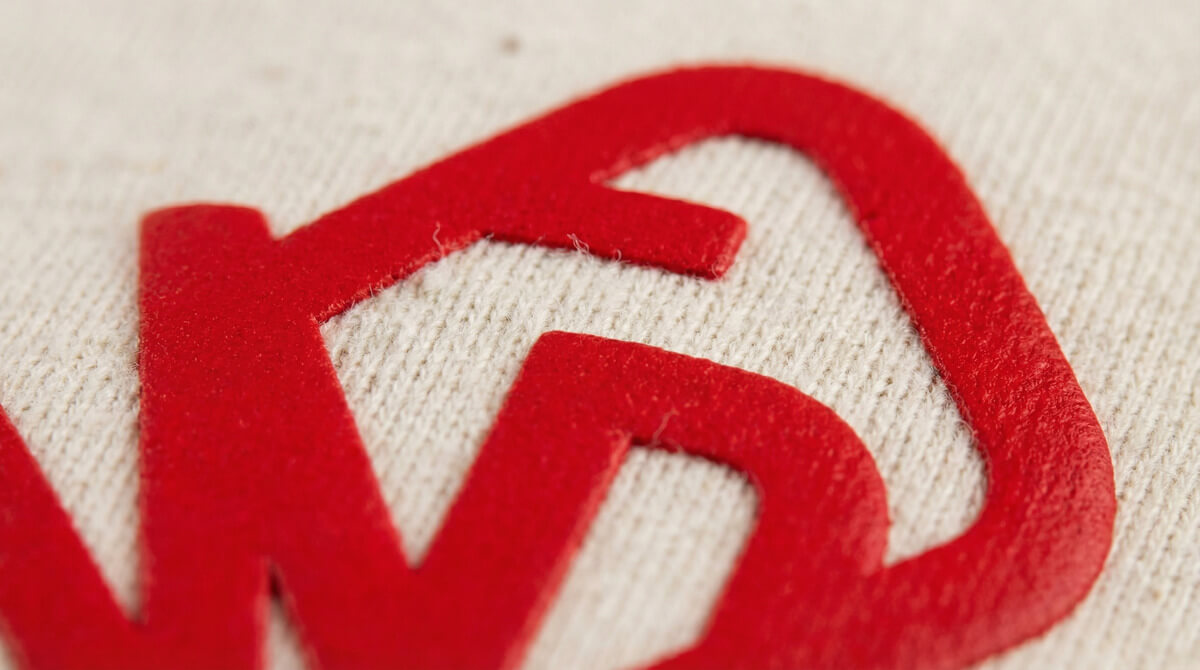
- Extreme durability: The ink bonds with the material. The print does not crack or peel.
- Color accuracy: Since we mix direct colors (Pantone), we achieve the exact shade of your brand (see our article on RGB vs. CMYK colors).
- Price for larger volumes: The more pieces you print, the lower the price per piece.
Print Preparation: Why isn't screen printing worth it for 1 piece?
We are often asked: "Why is one T-shirt so expensive, when a hundred come out cheap?" The answer lies in the demanding preparation. Before we print the first piece, we must:
- Separate your logo into individual colors (each color = one screen).
- Print film stencils (requires vector graphics!).
- Expose and wash the screens.
- Calibrate the printing machine (registration of colors).
This process takes the same amount of time for 1 piece as for 1000 pieces. Therefore, screen printing is usually economically viable from 20–30 pieces upwards.
| Feature | Screen Printing (Direct) | Digital Print / Transfer |
|---|---|---|
| Principle | Pushing ink through a stencil | Printing like a home printer / heat press |
| Durability | ⭐⭐⭐⭐⭐ (Highest) | ⭐⭐⭐ (Medium) |
| Suitable Quantity | Medium and Large (50+ pcs) | Small (1–20 pcs) |
| Colors | Direct colors (Pantone) | Full-color print (photos) |
What is screen printing used for most often?
In our production, we use this technology most often for:
- Promotional textiles: T-shirts, hoodies, polo shirts, workwear.
- Cotton bags: Ideal carrier for simple logos.
- Lanyards: Where sharp and readable text printing is needed.
- Paper bags and calendars.
Frequently Asked Questions (FAQ) about Screen Printing
What data do I need for screen printing?
For screen printing, data in curves (vectors) is absolutely essential. Formats like .ai, .eps, or vector .pdf. A raster image (jpg) cannot be used directly for screen production.
Can I wash screen-printed T-shirts in a washing machine?
Yes, without worry. Screen printing is very durable. We recommend washing at 40°C and ironing inside out so the print stays like new for years.
How many colors can I print?
Screen printing is done by individual colors (each color = one screen). We usually print logos with 1 to 4 colors. Digital transfer is more suitable for full-color photographs.
Planning a larger campaign with textiles?
Screen printing is the right choice for you. Let us calculate a non-binding quote for you.
- ✅ Volume discounts: The more pieces, the better the price.
- ✅ Quality guarantee: We print on our own machines under strict control.
- ✅ Free graphics: We will help you with logo placement and Pantone color selection.