
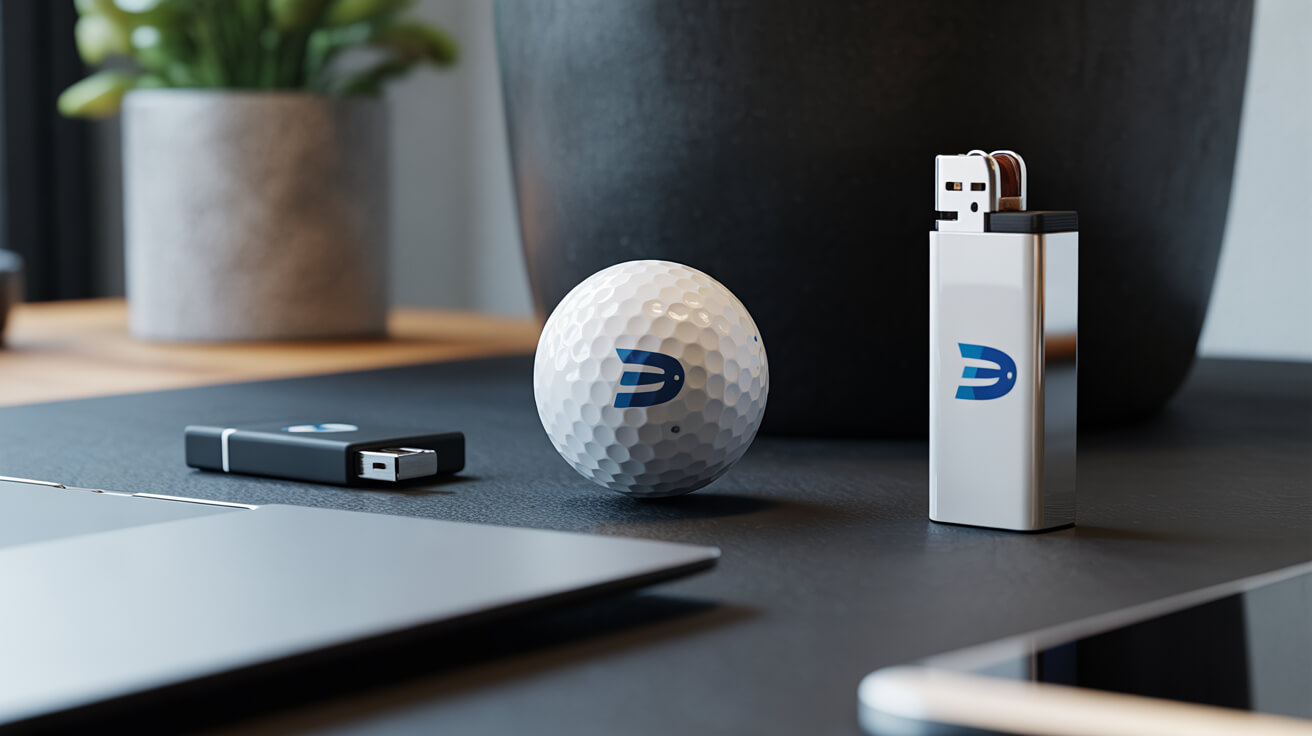
Pad printing is still one of the most widely used technologies in the promotional products industry in 2025. Thanks to its ability to transfer detailed graphics onto curved, uneven, or textured surfaces, it has no competition in many applications. Looking for a way to get your logo on a pen, golf ball, or USB drive? You’ve just found the solution.
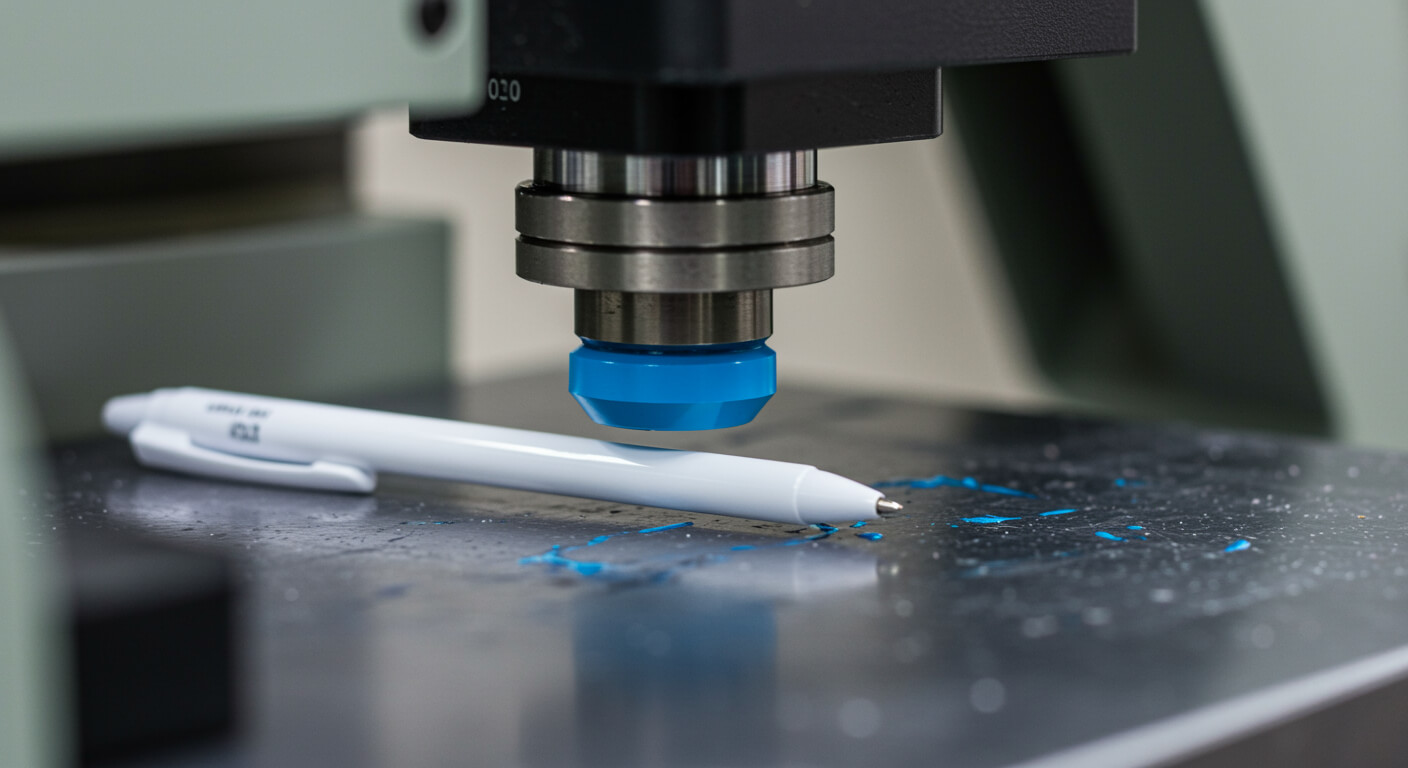
Pad Printing Principle: How Does It Work?
Think of pad printing as advanced "stamping," but capable of much more than just flat paper. The process uses a flexible silicone pad that acts as an ink transfer vehicle.
Step by Step:
- Cliché Preparation: The motif (logo) is etched into a metal plate (cliché).
- Ink Application: Special ink acts flooded into the etched depressions.
- Transfer: The silicone pad "picks up" the ink from the cliché.
- Printing: The pad is pressed onto the object. Thanks to its flexibility, it perfectly adapts to the product's shape – whether round, convex, or textured.
At TAEDA, this technology allows us to print even very fine details and small texts that other methods couldn't handle. To compare with another popular method, you can read our article about screen printing and its uses.
Why Is Pad Printing So Popular?
Despite the rise of digital technologies, "pad printing" holds its position as number one for small items. Here are the main reasons:
- Print on Any Shape: Concave, convex, and textured surfaces are no problem.
- High Resolution: Handles lines as thin as a few hundredths of a millimeter.
- Speed and Price: For series from 50 to 10,000+ pieces, it is often the most economically advantageous choice.
- Durability: We use two-component inks that, after curing, resist mechanical abrasion and chemicals.
Most Common Uses in Advertising
Thanks to its versatility, you can find pad printing on most items you might have on your desk right now. In our e-shop, we most often apply this technology to:
1. Writing Instruments
The curved surface of pens is a breeze for the silicone pad. We can print on the clip and the body of the pen. Check out our range of promotional pens, where we use this method daily.
2. Small Electronics and USBs
USB drives, power banks, or headphones require precise printing that won't rub off with frequent use. Browse USB flash drives suitable for printing.
3. Lighters and Keychains
A typical example of mass production where low cost per unit is key while maintaining quality. You can find the offer in the printed lighters section.
News and Trends for 2025
Even pad printing is not standing still. At TAEDA, we follow modern trends:
- Eco-friendly Inks: We are switching to inks free of heavy metals and with a lower environmental impact.
- Camera Control: Modern machines check print quality with optical sensors, minimizing defects.
- Technology Combination: We often combine pad printing with laser engraving to achieve unique effects.
Want to see what your logo will look like?
Take advantage of our corporate benefit! We offer 30 minutes of graphic work for free and data checking before production. Send us your logo, and we will prepare a non-binding preview.
Request Free PreviewFrequently Asked Questions (FAQ)
-
Is pad printing durable?
-
Yes, it is highly durable. We use inks that chemically bond to the material surface. For extreme loads (e.g., metal items), we use two-component inks with a hardener that resist washing or abrasion in a pocket.
-
How many colors can I print?
-
Pad printing usually handles 1 to 4 spot colors (Pantone). Each color is printed separately. If you have a logo with color gradients, we recommend digital UV printing instead.
-
What is the minimum font size?
-
This is one of the main advantages of this technology – we can print legible text from a size of about 4-5 points, depending on the font type and material.