
Forget expensive printing plates and long waiting times. Digital printing has revolutionized the printing industry. It allows you to print in perfect quality starting from just one piece, on demand, and with the ability to change text on every single print. When does it pay off the most?
What is Digital Printing?
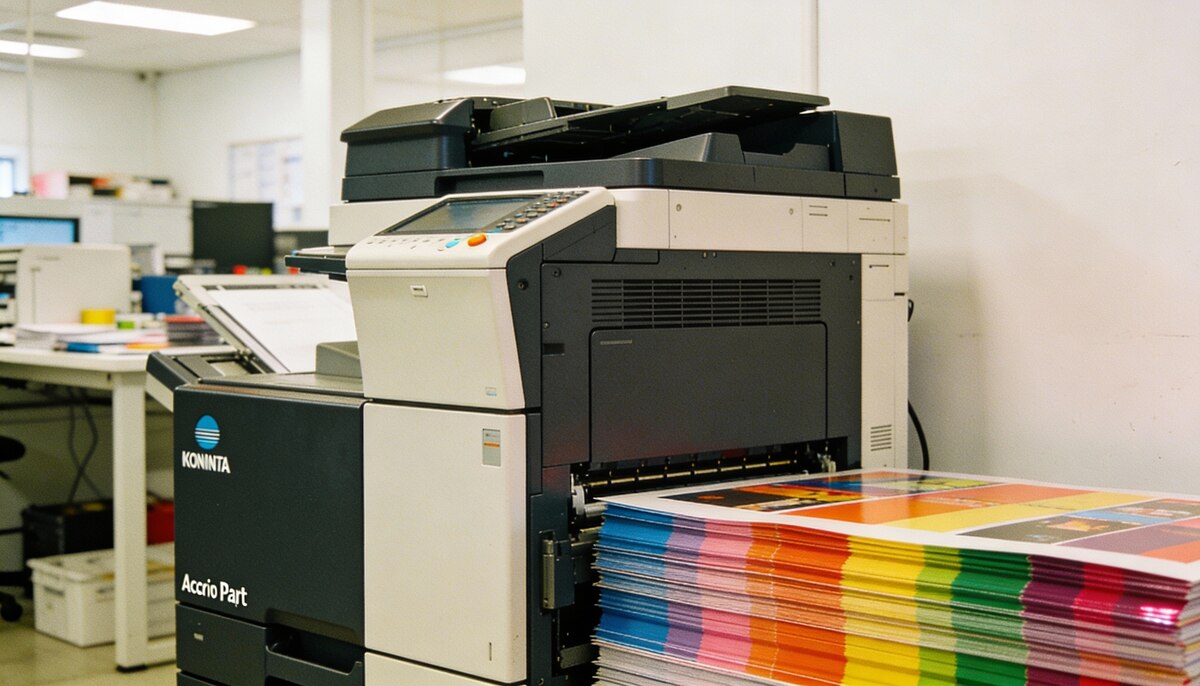
Digital printing is a technology that transfers an image directly from a computer to paper (or other materials) without the need to produce printing plates or molds. It works on a principle similar to your office laser printer, but with industrial quality and speed.
Thanks to the absence of intermediate steps (plate exposure, machine setup), the print is ready for production almost immediately after processing the graphic data. This makes it the ideal choice for express orders.
3 Key Advantages You Must Know
1. Speed (Time-to-market)
While an offset machine takes tens of minutes to set up, a digital machine prints the first sheets within seconds. If you order printed materials at TAEDA in the morning, digital technologies often allow us to ship them the same day or within 24 hours.
2. Price for Small Quantities
For orders in the range of tens to hundreds of pieces (e.g., 100 flyers, 200 business cards), digital printing is unrivaled in price. You do not pay any fixed fees for plate preparation – the cost per piece is almost constant.
3. Personalization (VDP)
This is something offset cannot do. Digital printing enables Variable Data Printing (VDP). Each flyer can have a different customer name, a unique discount code, or a different QR code. This dramatically increases the success rate of your direct mail campaigns.
Digital vs. Offset Printing: A Quick Comparison
Which technology should you choose? Follow a simple rule of quantity. For a detailed comparison, we recommend our article Offset Printing: A Complete Guide.
| Parameter | Digital Printing | Offset Printing |
|---|---|---|
| Startup Costs | Minimal (almost zero) | High (plate production) |
| Price per Piece | Constant | Decreases with quantity (massively) |
| Ideal For | Business cards, invitations, small flyer runs | Catalogs, books, thousands of flyers |
What Do We Print Most Often Digitally?
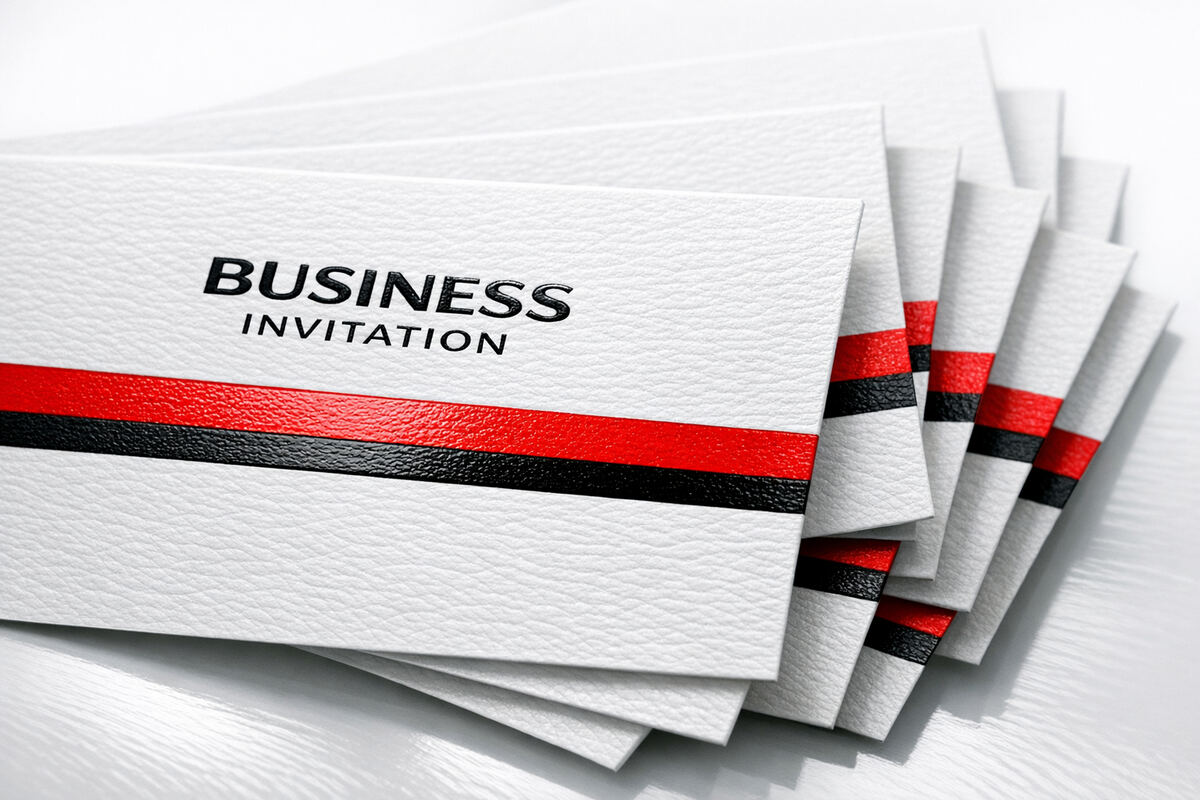
In our production, we use digital technologies for a wide range of products. Thanks to the high resolution of modern machines, the quality is indistinguishable from offset for the average user.
- Corporate Stationery: Business cards, letterheads, annual reports in small quantities.
- Marketing Materials: Flyers (promotional offers), posters up to A3+ format, brochures.
- Promotional Items: Digital UV printing allows us to print full-color designs (including photos) on promotional pens, lighters, or USB drives.
How to Prepare Data for Digital Printing?
Although digital is more "forgiving" than offset, please follow these principles for a professional result:
- Color Space: Ideally CMYK. While digital machines have a wider gamut and can print some RGB shades brighter than offset, we recommend CMYK for color fidelity. More in our graphic guidelines.
- Resolution: Minimum 300 DPI for sharp text and images.
- Bleed: Do not forget a 3mm overlap (bleed) for cutting.
Need Advice on Choosing a Technology?
Don't worry about technical details; leave it to us. At TAEDA, we automatically select the technology (digital vs. offset) that works out best for your budget.
- Free check of print data before production.
- Express delivery terms.
- In-house production and stock.